
A pair of shoes may no longer serve its owner, but that does not necessarily mean it belongs in the bin. Perhaps the soles have worn down while the uppers remain intact. Or the footwear has become uncomfortable and is no longer suitable for everyday use. In either case, some of its materials may still have value.
The difficulty lies in knowing what can be recovered. Footwear combines rubber, foam, textiles, synthetic leather and adhesives, often bonded together in ways that make processing challenging. Depending on its condition and construction, a discarded pair may be suitable for refurbishment, upcycling or another recovery method. Others may not be accepted by a particular programme.
Greensole Foundation works to give suitable discarded footwear and industrial textile waste another purpose. Through collection, assessment and processing, these materials can become slippers, school bags and mats for children in need. But how does a donated item make that journey, and why can’t every pair follow the same route?
From Donation to Distribution: How Does the Journey Work?
A donated pair of shoes does not go straight from a collection box to a child. First, it must enter the collection system. Then comes assessment, followed by the appropriate processing and distribution stages.
The footwear donation journey
Collection → Recording and assessment → Manufacturing and upcycling → Donation drives → Children and communities
Each stage serves a specific purpose. Together, they help ensure that suitable materials are directed towards practical applications rather than treated as waste without further consideration.
1. Collection: Bringing Unwanted Footwear Together
Every recovery journey starts with collection. Greensole Foundation gathers discarded footwear and industrial textile waste through corporate partners, educational institutions, residential societies and retail outlets with collection bins. It also works with waste management agencies and NGOs to extend its collection network.
These partnerships bring materials together from different sources. They also create opportunities for businesses, schools and communities to participate in organised recovery efforts.
Donors must follow the foundation’s acceptance guidelines. Greensole asks them to tie their shoes together before dropping them off or sending them to a collection centre. Its published guidelines exclude footwear with heels, sports stud shoes and footwear for children below six years. Checking the latest requirements before donating helps avoid unsuitable items entering the collection stream.
Collection, however, is only the first step. The condition and composition of the materials determine what happens next.
2. Recording and Assessment: What Can Be Recovered?
Once collected, footwear and textile waste need to be sorted and assessed. A pair that looks worn may still contain suitable materials, while another may be too damaged for the intended process. Appearance alone is not enough to determine its recovery potential.
Greensole Foundation records collected materials through a data management system. This supports inventory management, reporting to donors and partners, environmental impact tracking and planning for future collection activities.
The materials are also sorted, sanitised and assessed for reuse or upcycling. Their condition and suitability help determine the next stage.
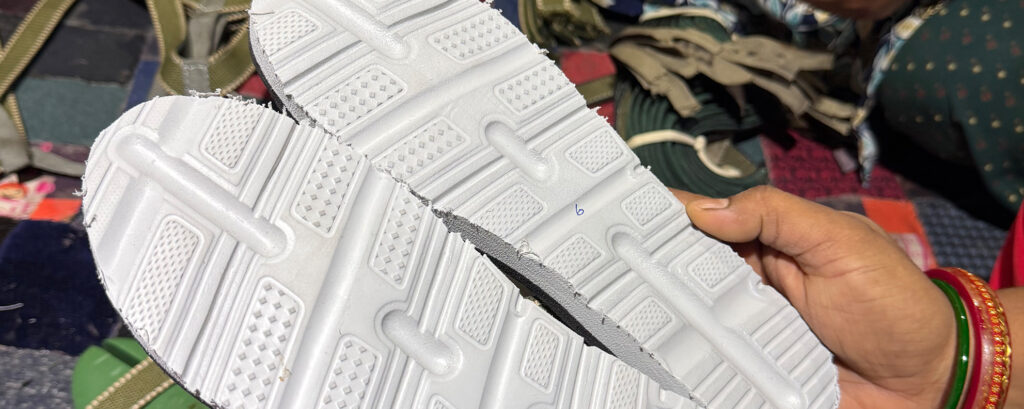
Consider a pair of shoes with worn components. Depending on its construction, it may be suitable for refurbishment or processing into another product. Industrial textile waste, meanwhile, is assessed for its potential use in items such as bags and mats.
Not every item will qualify. The purpose of assessment is to identify realistic options before processing begins, helping direct materials towards appropriate applications.
3. Manufacturing and Upcycling: Giving Materials Another Purpose
After assessment, suitable materials move to the manufacturing stage. At Greensole Foundation’s facility, discarded footwear is refurbished into comfortable slippers, while industrial textile waste is converted into school bags and mats.
The process depends on the material and the intended product. Footwear may require refurbishment, whereas textile waste can be adapted for a different use. Both approaches aim to retain value from materials that might otherwise be discarded.
Quality matters just as much as recovery. The foundation’s production model emphasises hygiene, safety and quality standards for distributed products.
There is also a livelihood dimension to this work. Greensole supports local training and employment opportunities, particularly for women. Its Skill Centre, established in 2018 in collaboration with Tata Steel and Lions Club Noamundi, focuses on skills development linked to footwear refurbishment.
In this way, material recovery can contribute to more than waste reduction. It can also support practical skills, employment and community participation.
4. Donation Drives: Where Do the Finished Products Go?
Once the products are ready, they need to reach people who can use them. This is where donation drives complete the recovery journey.
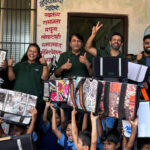
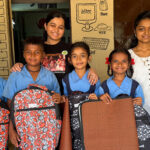
Greensole Foundation distributes upcycled slippers, bags and mats through initiatives involving government and low-income schools, orphanages, child shelters, and rural and tribal communities. Local partners, education departments and corporate social responsibility (CSR) sponsors help organise these activities.
The process also involves identifying beneficiaries and documenting distribution through photographs, testimonials and reports. These records help communicate the outcomes to partners and supporters.
The final stage gives the recovery process a clear purpose. Materials that once had limited use can become everyday products for children in need, connecting environmental action with practical social support.
Why Can’t Every Pair of Footwear Be Recovered in the Same Way?
The answer lies largely in how shoes are made. A single pair may contain rubber soles, foam cushioning, textile uppers, synthetic leather and adhesives. Each material has different properties, and separating them is not always straightforward.
Damage presents another challenge. A shoe with worn components may be suitable for refurbishment, but extensive deterioration can limit its recovery options. The methods and facilities available also influence what can be done.
Three approaches are particularly relevant:
- Refurbishment: Restoring footwear for further use through cleaning, repairs or the replacement of worn components, where suitable.
- Upcycling: Transforming discarded products or materials into useful items, such as slippers made from recovered footwear or bags made from textile waste.
- Recycling: Processing waste materials so that they can be used in new products or applications, where suitable facilities are available.
These methods serve different purposes. A product that cannot be reused directly may still offer recovery potential, but this must be established through assessment. Some items may also fall outside a programme’s acceptance criteria.
How Can Individuals and Organisations Help?
Better recovery begins before footwear reaches a processing facility. Donors can check the acceptance guidelines, tie their shoes together and use the collection channels recommended by the foundation.
Businesses, schools and residential societies can contribute by organising collection drives. Clear instructions help participants understand what to donate and how to prepare it. For organisations collecting larger quantities, working with an established recovery partner can also make collection easier to coordinate.
The important point is to donate responsibly. Not every pair will become a finished product, and unsuitable items may need a different route. Following collection requirements helps the recovery process focus on materials that can realistically be used.
Conclusion
Not every pair of footwear can be recovered in the same way. Some may be suitable for refurbishment, while others may offer potential for upcycling or another material recovery method. A few may not meet a programme’s acceptance criteria at all.
Greensole Foundation’s approach connects collection, assessment, manufacturing and distribution. Suitable discarded footwear is refurbished into slippers, while industrial textile waste is transformed into school bags and mats for children in need. The process also supports skills development and community participation.
The next time you find an unwanted pair of shoes, pause before throwing it away. Check whether it can be accepted by a suitable recovery programme. That small decision is the beginning of a larger process, one that can help keep useful materials in circulation and connect environmental responsibility with meaningful social outcomes.