
Used shoes recycling initiatives in India are playing a crucial role in solving two major challenges at once: environmental waste management and lack of access to basic footwear among underprivileged communities. Through structured collection and upcycling systems, organisations like Greensole Foundation are transforming discarded shoes into usable, comfortable products such as slippers, school bags, and mats.
This process not only supports sustainability but also builds a strong circular economy where waste is converted into value. Understanding how this system works step by step helps highlight the importance of shoe recycling, footwear recycle practices, and upcycling innovation in India’s social impact ecosystem.
The Need for Shoe Recycling in India
India generates a significant amount of footwear waste every year, much of which ends up in landfills. Most shoes are made using mixed materials like rubber, foam, fabric, and synthetic leather, making them difficult to decompose. As a result, discarded footwear contributes heavily to environmental pollution.
At the same time, millions of underprivileged children walk barefoot or wear worn-out footwear, leading to health issues such as infections, injuries, and foot-related diseases. A structured shoe recycling initiative bridges this gap by redirecting usable materials into meaningful social impact.
By repurposing discarded footwear, organisations reduce landfill burden while improving access to essential items for children in need.
Step by Step Process of Shoe Recycling and Upcycling
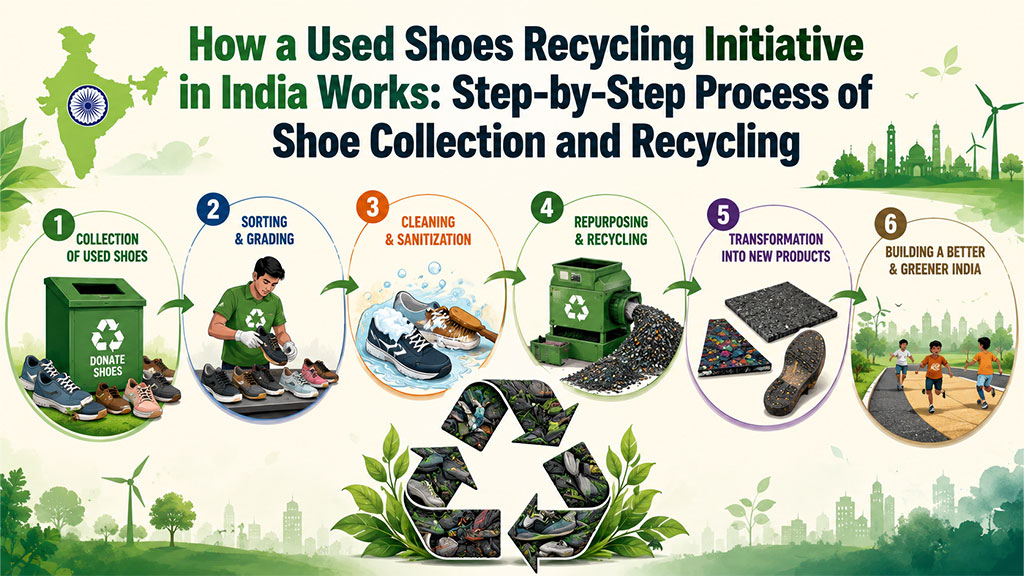
The shoe recycling process followed by initiatives like Greensole Foundation is carefully designed to ensure maximum material recovery, quality output, and social impact.
1. Collection of Used Footwear and Clothes
The first step begins with donation drives and individual contributions. Supporters send their used shoes and clothes directly to collection centres.
Donations are received from individuals, corporates, schools, and community drives. Items are either couriered or dropped off at designated collection points. Proper packaging is encouraged to ensure safe transportation.
This stage plays a vital role in building awareness about footwear recycle practices and encouraging responsible consumption habits.
2. Sorting and Selection Process
Once the donations arrive, the sorting process begins. Not all footwear can be reused, so a strict selection system is followed.
Accepted items include:
- Flat sole shoes
- Sandals
- Sports shoes (non-stud)
- Slippers
- Formal and casual shoes
Rejected items include:
- Women’s heels and wedges
- Football studs or specialised sports footwear
- Broken or heavily damaged shoes
- Kids’ footwear below a certain age range (as per guidelines)
This step ensures that only recyclable and upcyclable materials enter the production chain, maintaining efficiency in the shoe recycling system.
3. Cleaning and Disinfection
After sorting, selected footwear undergoes a deep cleaning process. Shoes are sanitised to remove dirt, bacteria, and impurities.
This step is crucial for hygiene and safety, especially when products are intended for children. Cleaning also helps in identifying usable components like soles, foam, and fabric layers that can be reused in the upcycling process.
4. Dismantling and Material Recovery
In this stage, footwear is carefully dismantled. Different parts such as soles, upper fabric, foam padding, and rubber components are separated.
Each material is evaluated based on usability. Around 80 to 90 percent of the footwear is typically recovered for reuse, which makes this process highly efficient in reducing waste.
This stage lays the foundation for creating new products from recovered materials.
5. Upcycling into New Products
Recovered materials are then converted into useful and durable products such as:
- Comfortable slippers for schoolchildren
- Durable school bags for carrying books and essentials
- Eco friendly mats for seating and learning spaces
This stage is where recovered materials are transformed into useful products. Instead of producing new raw materials, existing waste is reshaped into functional products, significantly reducing environmental impact.
Each product is designed with comfort, durability, and usability in mind, ensuring that children receive practical everyday essentials.
6. Quality Check and Finishing
Before distribution, every product goes through strict quality checks. This ensures that slippers are comfortable, bags are strong, and mats are safe for daily use.
Finishing touches include stitching reinforcement, sizing adjustments, and final inspection. Quality control ensures that recycled products match usability standards and provide long term value.
7. Distribution to Underprivileged Communities
After quality approval, the final products are distributed to schools, rural communities, and underprivileged children across India.
These distributions help address multiple challenges:
- Lack of proper footwear
- Hygiene and health issues
- Educational resource support through bags and mats
This step ensures that shoe recycling directly translates into social upliftment and dignity for children in need.
8. Transparency and Impact Tracking
A strong feature of structured shoe recycling initiatives is transparency. Donation tracking, collection data, and distribution reports are shared with supporters.
This builds trust and encourages more participation from individuals and organisations. Over time, these efforts contribute to both social welfare and environmental conservation.
Environmental and Social Impact of Shoe Recycling
These initiatives contribute to both environmental protection and social welfare.
Key benefits include:
- Reduction in landfill waste
- Conservation of raw materials
- Lower carbon footprint through upcycling
- Improved health and hygiene for children
- Access to essential footwear and school accessories
By reusing 80 to 90 percent of discarded footwear, the system significantly reduces environmental pressure while improving quality of life for underserved communities.
Employment and Skill Development Opportunities
Beyond environmental and social impact, shoe recycling initiatives also generate employment opportunities. Many women and families are trained in sorting, cleaning, dismantling, and product assembly.
Skill development centres help individuals gain steady income sources while contributing to meaningful social change. This creates a sustainable ecosystem where environmental responsibility and livelihood generation go hand in hand.
Educational and Awareness Initiatives
Shoe recycling organisations also focus on spreading awareness about sustainability and responsible consumption. Workshops and campaigns educate students and communities about:
- Responsible footwear disposal
- Environmental impact of waste
- Benefits of reuse and circular economy practices
- Sustainable lifestyle choices
These initiatives help build long term behavioural change, encouraging more people to participate in recycling efforts.
How You Can Contribute to Shoe Recycling
Individuals and organisations can support these initiatives in several ways:
- Donate usable old footwear and clothes
- Participate in collection drives
- Organise CSR partnerships
- Spread awareness in schools and workplaces
- Support sustainable consumption habits
Even small contributions can create significant environmental and social impact when part of a structured recycling system.
Conclusion
A used shoes recycling initiative in India is more than just waste management. It is a complete circular system that combines environmental sustainability, social empowerment, and economic opportunity.
Through structured processes like collection, sorting, cleaning, dismantling, and repurposing, organisations such as Greensole Foundation transform discarded footwear into meaningful products for underprivileged children.
By promoting responsible reuse and circular economy practices, India moves closer to a sustainable future where no resource is wasted and every child walks with dignity.