
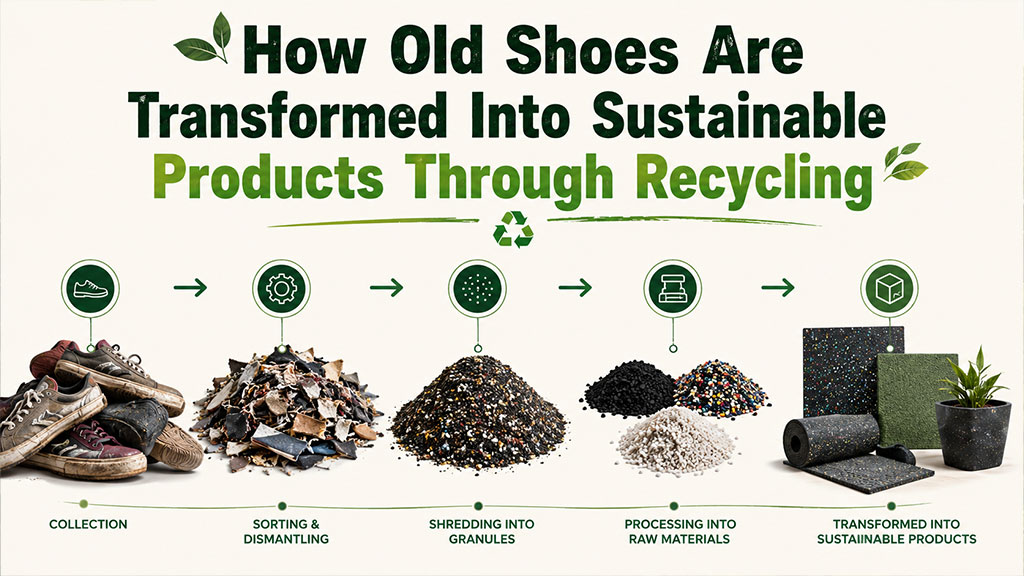
At Greensole Foundation, we believe every discarded pair of shoes carries the potential to create meaningful environmental and social impact. Instead of allowing footwear waste to end up in landfills, we transform it into sustainable, useful products through a structured shoe recycling and upcycling process. This approach helps reduce environmental pollution while supporting underprivileged communities across India.
Old footwear is made using mixed materials such as rubber, foam, fabric, and synthetic layers, which makes it difficult to decompose naturally. Interestingly, many shoes are discarded simply because one component has worn out, even though other parts remain usable. By recovering these materials and giving them a second life, waste can be transformed into products that create both environmental and social value.
Collection of Old Shoes and Recyclable Materials
The transformation process begins with the collection of used footwear and other recyclable materials through donation drives and CSR partnerships.
Key sources include:
- Individual donations
- Corporate CSR collections
- School and community drives
- Material donations like old footwear and flex waste
These items are sent to our processing centres for further evaluation and recycling.
Sorting and Selection Process
Once collected, all materials undergo a detailed sorting process to identify usable items.
We ensure:
- Separation of wearable and non wearable footwear
- Removal of heavily damaged or unusable items
- Categorisation based on material type and condition
- Selection of items suitable for upcycling
Only appropriate materials enter the recycling workflow, ensuring efficiency and quality.
Cleaning and Sanitisation
Before processing, all selected footwear is thoroughly cleaned and sanitised.
This step ensures:
- Removal of dust, dirt, and impurities
- Hygienic processing for safe reuse
- Preparation of materials for dismantling
- Quality assurance for final products
Clean materials are essential for producing safe and usable end products.
Dismantling and Material Recovery
The cleaned footwear is carefully dismantled into its core components.
Materials recovered include:
- Rubber soles
- Foam padding
- Fabric layers
- Synthetic and flexible materials
Key benefits of this stage:
- High material recovery efficiency
- Reduction of waste sent to landfills
- Maximum utilisation of available resources
- Preparation for upcycling into new products
A significant percentage of materials can be reused effectively in the next stage.
This stage highlights an important principle of circular design. While a shoe may no longer serve its original purpose, many of its materials still retain durability and functionality. Recovering these resources helps extend their lifecycle and reduces the environmental impact associated with producing entirely new materials.
Upcycling into Sustainable Products
Recovered materials are transformed into new functional products designed for everyday use.
Products created include:
- Comfortable slippers for children
- Durable school bags for education support
- Eco friendly mats for seating and learning spaces
Each product focuses on:
- Durability for long term use
- Comfort for daily usability
- Practical design for children and communities
- Sustainability through reuse of materials
This is the core of footwear upcycling where waste becomes value. Materials that might otherwise contribute to landfill waste are reimagined into practical products that support education, comfort, and everyday needs. By extending the life of existing resources, the process also helps reduce the environmental impact associated with manufacturing new products.
Innovation in Flex Waste Upcycling
Innovation in sustainability often begins by looking at waste differently. Along with footwear recycling, efforts have expanded into other challenging waste streams such as discarded flex material, demonstrating how materials with limited end of life options can be repurposed into useful products.
Key initiative highlights:
- Collaboration with DBS Bank in 2023
- First time upcycling of flex into school bags for rural students
- Conversion of frequently discarded advertising material into useful products
- Large scale waste reduction through repurposing
Benefits of flex upcycling:
- Reduction of industrial advertising waste
- Expansion of circular economy approach
- Creation of durable educational resources
- Support for rural education infrastructure
This innovation strengthens the overall sustainability model and demonstrates how creative thinking can unlock value from materials that are often overlooked.
Quality Checking and Final Preparation
Before distribution, every product undergoes strict quality checks.
Quality standards include:
- Strong stitching and durability
- Safe finishing with no sharp edges
- Comfort and usability testing
- Long lasting performance checks
Only products that meet these standards are approved for distribution.
Distribution and Social Impact
The final upcycled products are distributed to underprivileged children and communities across India.
Key benefits include:
- Improved access to footwear for better hygiene
- School bags that support education needs
- Mats that enhance classroom and home comfort
- Better dignity and quality of life for children
This ensures that recycled materials directly contribute to social upliftment.
Environmental Benefits of Shoe Recycling
The entire process delivers strong environmental advantages:
- Reduction in landfill waste accumulation
- Lower carbon emissions from reduced manufacturing demand
- Conservation of natural resources
- Promotion of circular economy practices
- Decrease in environmental pollution from discarded footwear
Shoe recycling plays a critical role in sustainable waste management while helping valuable materials remain in use for longer.
Social and Community Impact
Beyond environmental benefits, the initiative creates long term social value.
Key impacts include:
- Support for children’s education and well being
- Improved hygiene and health conditions
- Awareness about sustainability and recycling
- Encouragement of responsible consumption habits
Each recycled product becomes part of a larger social transformation.
Making Circular Innovation Practical
Sustainable innovation is not only about creating new products but also about rethinking existing resources. Whether it is footwear, textiles, or flex material, the goal is to keep valuable materials in use for as long as possible. This circular approach helps reduce waste, conserve resources, and create products that deliver meaningful benefits to communities.
Conclusion
At Greensole Foundation, old shoes and discarded materials are transformed into meaningful, sustainable products through structured shoe recycling and footwear upcycling systems. By combining innovation, environmental responsibility, and social impact, we ensure that waste is not discarded but reimagined into something valuable.
Through initiatives such as footwear recycling and flex waste upcycling, we continue to demonstrate how innovation can transform discarded materials into opportunities. By finding new purpose in resources that might otherwise be wasted, we are helping build a circular economy that benefits both people and the planet while contributing to a more sustainable future for India.