
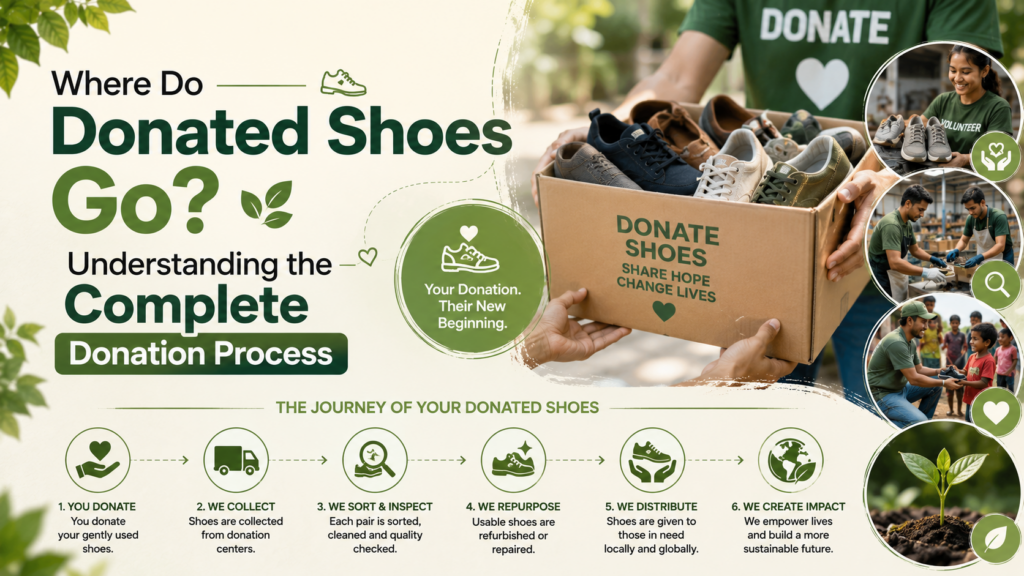
Every year, thousands of pairs of shoes are donated with the hope that they will help someone in need. Yet many people still wonder what actually happens after they hand over their old footwear. Where do donated shoes go? How are they processed? And how do they eventually reach the children who need them most?
The journey is far more thoughtful than simply collecting and redistributing old shoes. Each donation passes through a structured process designed to maximise both environmental and social value. From collection and refurbishment to distribution, every stage has a purpose. The result is simple but powerful: discarded footwear gets a second life while creating a lasting impact for people and the planet.
Every Donation Begins with a Simple Choice
Most people replace their shoes once the soles wear out. Yet the upper part often remains in good condition, with plenty of life left in it.
Instead of ending up in a landfill, these shoes can become part of something much bigger.
A single donation may seem like a small gesture, but it sets an entire chain of positive action in motion. It helps reduce waste, conserves valuable materials, creates livelihood opportunities, and eventually provides comfortable footwear to children who need them most. That journey begins with one simple decision: donate instead of discard.
Step 1: Collection Through Donation Drives
The process starts with collection.
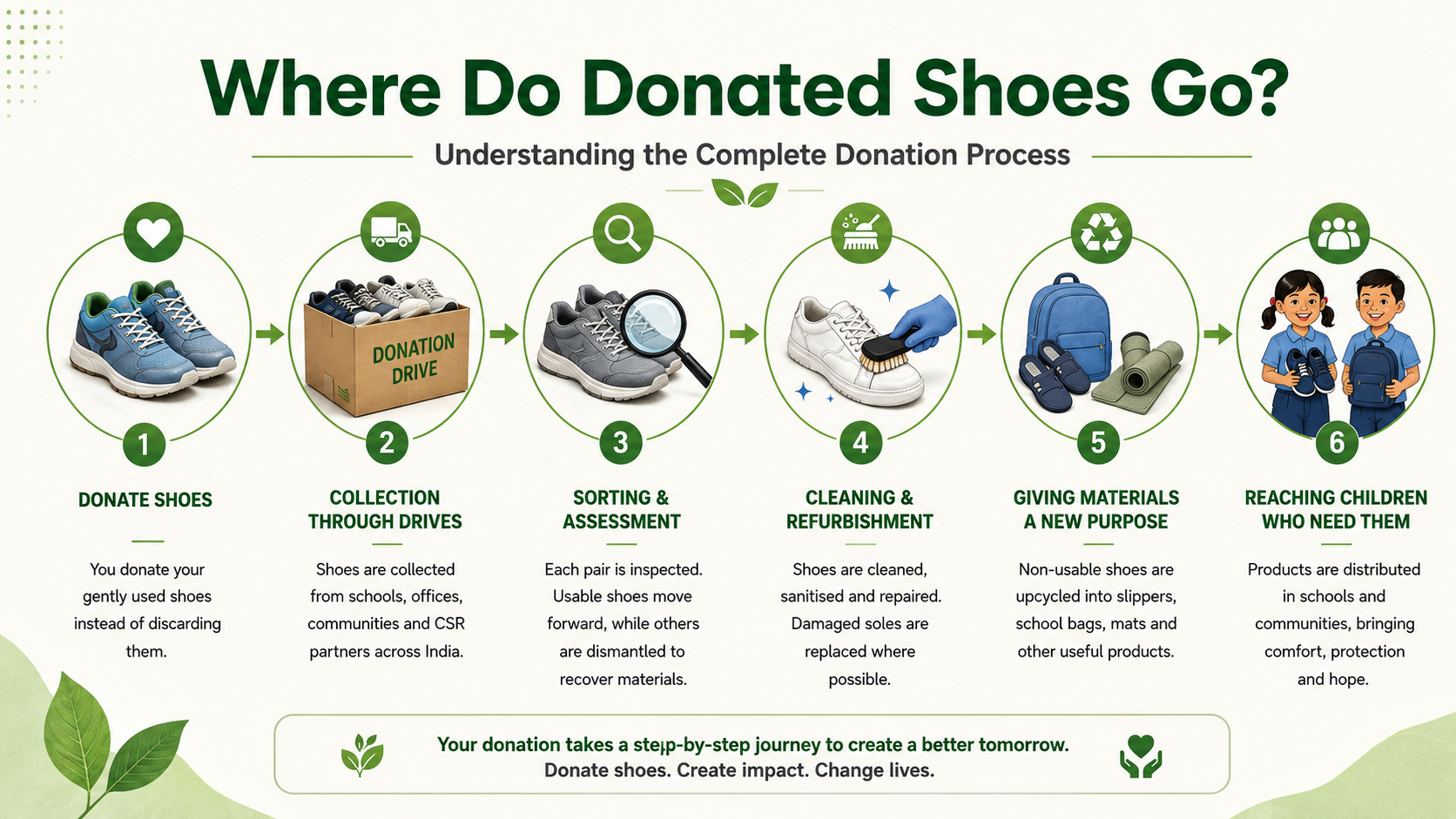
Used footwear is gathered through individuals, schools, housing societies, corporate offices, and CSR partnerships across India. Collection drives make it easy for people to contribute responsibly instead of throwing away shoes that still have value.
Once collected, the footwear is transported to our refurbishment facility. Here, every donation begins its next chapter. What might have become landfill waste now enters a circular system designed to maximise its usefulness.
Step 2: Careful Sorting and Assessment
Every donated pair tells a different story.
Some shoes can be refurbished and worn again. Others may no longer be wearable, yet still contain materials that can be recovered and repurposed.
Each pair is inspected carefully for its condition, material, and overall usability. Shoes suitable for refurbishment continue through the process, while others are dismantled so reusable components can be separated.
Interestingly, many shoes are discarded only because the soles have worn out. The upper section often remains perfectly usable. Recovering these materials allows them to serve a new purpose instead of adding to landfill waste.
Step 3: Cleaning and Refurbishment
Before any footwear is prepared for reuse, it undergoes thorough cleaning and sanitisation.
The refurbishment process is carried out with care. Damaged soles are repaired or replaced wherever possible, materials are reinforced, and each pair is prepared for everyday use once again.
The goal is straightforward. Every child should receive footwear that is clean, comfortable, durable, and ready for daily life. Quality is never treated as an afterthought because these products are designed to support children every single day.
Step 4: Giving Materials a New Purpose
Not every donated shoe can return to its original form. That does not mean it has reached the end of its journey.
Recovered materials are transformed into useful products that continue serving communities in different ways. Depending on their condition, they may become slippers, school bags, classroom mats, or sustainable materials for future applications.
Innovation also extends beyond footwear. Through the Flex to Bag initiative, discarded flex banners are converted into durable school bags for children studying in rural schools. A material that once served a temporary purpose is given a much longer and more meaningful life.
Every resource is viewed as an opportunity rather than waste.
Step 5: Reaching the Children Who Need Them
This is where the journey comes full circle.
Before distribution begins, schools and communities are carefully identified. Information such as student numbers and footwear sizes is collected so products can be prepared accordingly.
Once manufacturing and quality checks are complete, distribution drives are organised directly within these communities. Children receive footwear that protects their feet, improves comfort, and supports healthier daily lives. Many also receive school bags and mats that help create a better learning environment.
For them, it is far more than receiving a donated product. It is receiving something created specifically with their needs in mind.
Every Donation Creates Multiple Layers of Impact
The impact of a donated shoe extends well beyond the child who receives it.
Throughout the journey, environmental and social benefits are created at the same time. Waste is diverted from landfills. Valuable materials stay in circulation for longer, and employment opportunities are generated through refurbishment and production activities.
Each donation contributes to:
- Reducing footwear waste sent to landfills
- Conserving reusable materials
- Lowering carbon emissions through material recovery
- Supporting circular economy practices
- Creating employment through refurbishment and production
- Developing practical skills within local communities
- Providing footwear and educational essentials to children
One donated pair can create value at every stage of its journey.
Transparency Builds Trust
Responsible donation programmes are built on accountability.
Once a distribution drive is completed, detailed impact reports are prepared. These include information about the schools supported, the products distributed, photographs from the programme, and acknowledgements from participating institutions.
The environmental impact is also assessed by auditing the quantity of footwear and other materials diverted from landfill through the upcycling process. This allows donors and CSR partners to understand how their contributions are creating measurable environmental and social outcomes.
Transparency strengthens trust. It also encourages more people to become part of the movement.
How You Can Become Part of the Journey
Making a difference does not always require a large contribution.
Sometimes, it begins with an old pair of shoes sitting unused at home.
You can support this journey by:
- Donating footwear that is no longer in use
- Organising collection drives in schools, offices, or communities
- Encouraging friends and family to donate responsibly
- Participating in CSR initiatives that promote circular economy practices
- Spreading awareness about sustainable footwear disposal
Every contribution matters. Together, these simple actions create cleaner communities, reduce waste, and help essential resources reach children who need them most.
Conclusion
A donated pair of shoes does much more than leave one home and arrive in another. It begins a carefully managed journey that combines sustainability, innovation, and social responsibility.
At Greensole Foundation, every donation is collected, assessed, refurbished or upcycled, and thoughtfully distributed to children who need it most. Along the way, the process helps reduce landfill waste, conserve valuable resources, support livelihoods, and lower the environmental impact of discarded footwear.
When you choose to donate instead of discard, you are not simply giving away an old pair of shoes. You are helping create opportunities, protect the environment, and take another meaningful step towards a more circular and inclusive future.