
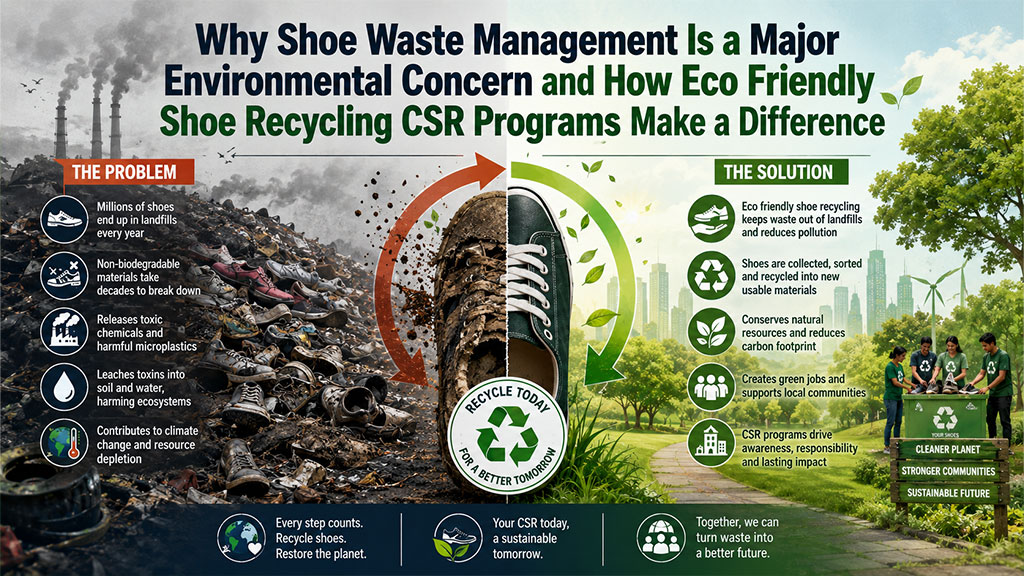
Shoe waste management is emerging as a significant environmental challenge in a world where consumption continues to rise and product lifecycles are becoming shorter. Millions of pairs of shoes are discarded every year, adding to the growing burden on landfills and waste management systems. Since most footwear is made from multiple materials that are difficult to separate and recycle, much of it remains in the environment long after it has been thrown away. This not only contributes to pollution but also results in the loss of valuable materials that could otherwise be recovered and reused.
Eco friendly shoe recycling CSR programs are helping change this narrative. By recovering materials from discarded footwear and transforming them into useful products, these initiatives reduce waste, support communities, and promote more sustainable approaches to resource use.
Understanding the Environmental Impact of Shoe Waste
Footwear waste is a growing concern because of its long decomposition cycle and toxic environmental impact. Most shoes are not biodegradable due to mixed synthetic materials, adhesives, and chemical based dyes.
Interestingly, many shoes are thrown away simply because the sole is worn out, even though the upper part remains usable. Recovering these materials helps reduce waste while extending the life of valuable resources.
When shoes are dumped in landfills, they contribute to:
- Soil contamination from toxic materials
- Air pollution from slow degradation and burning
- Landfill overcrowding due to bulky waste volume
- Microplastic leakage into ecosystems
Why Shoe Waste Management Is Becoming a CSR Priority
Corporate Social Responsibility programs in India are increasingly focusing on environmental sustainability and community welfare. Sustainable footwear recovery initiatives align closely with these objectives by addressing both ecological and social challenges.
Key CSR objectives supported by shoe waste management include:
- Environmental protection through waste reduction
- Community upliftment through donation programs
- Circular economy development
- Resource efficiency and material recovery
- Sustainable consumption awareness
By integrating footwear recycle systems into CSR strategies, companies can actively contribute to long term sustainability while supporting underprivileged populations.
The Role of Eco Friendly Shoe Recycling Programs
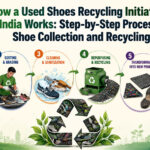
Eco friendly shoe recycling programs focus on collecting, processing, and transforming used footwear into reusable products. Instead of sending shoes to landfills, these programs ensure maximum material recovery and reuse.
A structured footwear recovery and reuse process typically includes:
- Diverting footwear waste from landfills
- Recovering usable materials through upcycling
- Creating essential products for underserved communities
- Supporting sustainability goals through resource reuse
- Encouraging participation from corporates and individuals
This systematic approach ensures that up to 80 to 90 percent of materials are recovered and reused effectively.
How Upcycling Helps Reduce Environmental Pressure
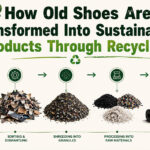
Upcycling plays a central role in sustainable shoe waste management. Unlike traditional recycling, which breaks materials down completely, upcycling transforms discarded items into new value added products without destroying their core materials.
Through upcycling discarded footwear, organisations are able to:
- Reduce dependency on virgin raw materials
- Lower carbon emissions from manufacturing
- Extend the lifecycle of existing products
- Minimise landfill contribution
- Promote circular production systems
Products such as slippers, school bags, and mats created from used shoes not only reduce waste but also serve meaningful social purposes.
Circular Impact Model for Sustainable Footwear Recovery
Modern footwear recovery initiatives create impact far beyond waste reduction. By combining environmental action, community welfare, and livelihood generation, they help build a sustainable ecosystem where discarded materials can support meaningful social outcomes.
These models typically address three key areas:
1. Climate Action
By diverting discarded footwear, apparel, and flexible materials from landfills, significant carbon emissions are reduced. This supports climate friendly waste management practices and reduces environmental burden.
2. Social Impact
Access to footwear and essential school supplies helps improve attendance, comfort, and confidence among children, supporting their overall learning environment.
Upcycled products such as slippers, bags, and mats are distributed to underprivileged children, improving health, hygiene, and access to education essentials.
3. Skilling and Employment
These programs empower women and local communities by training them in upcycling processes, creating sustainable livelihood opportunities.
This integrated approach ensures that environmental goals and social development progress together.
Connection with Sustainable Development Goals
Eco friendly footwear recovery initiatives strongly align with multiple United Nations Sustainable Development Goals, making them globally relevant and impactful.
Key SDGs supported include:
- Good Health and Well being (SDG 3) by reducing infections and foot related diseases through access to footwear
- Quality Education (SDG 4) by supporting learning environments through access to school bags, mats, and essential resources
- Gender Equality (SDG 5) through skill development opportunities for women
- Industry, Innovation and Infrastructure (SDG 9) by promoting sustainable production systems
- Sustainable Cities and Communities (SDG 11) by reducing urban waste burden
- Responsible Consumption and Production (SDG 12) by encouraging reuse and recycling practices
- Climate Action (SDG 13) through reduced landfill emissions and resource conservation
These alignments show how responsible footwear recovery is not just a waste solution but a broader sustainability strategy.
Social Benefits of Footwear Recovery Initiatives
Beyond environmental advantages, shoe waste management delivers strong social impact. Many underprivileged children face challenges that extend beyond access to footwear. Limited resources often affect their health, comfort, mobility, and ability to participate fully in education.
These initiatives help by providing:
- Comfortable and durable slippers for daily use
- School bags for carrying educational materials
- Mats for seating and learning comfort
- Improved hygiene and reduced exposure to infections
This ensures dignity and safety for children while supporting their educational journey.
Economic and Employment Opportunities
Eco-friendly footwear recovery also supports local economies. Collection, sorting, cleaning, and upcycling processes require skilled and semi skilled labour, creating employment opportunities in underserved communities.
Community based production and upcycling activities also encourage local participation in sustainability initiatives, helping create long term economic value.
Key economic benefits include:
- Skill based training for women and youth
- Job creation in recycling and manufacturing units
- Sustainable livelihood development
- Reduced dependence on traditional manufacturing chains
This makes sustainable footwear recovery a powerful model for inclusive economic growth.
Why Businesses Should Support Footwear Recovery Programmes
Companies today are expected to actively participate in sustainability initiatives. These programmes offer measurable impact and strong alignment with environmental responsibility while creating visible community benefits.
Benefits for businesses include:
- Improved CSR reporting and sustainability metrics
- Strong alignment with ESG goals
- Enhanced brand reputation and social trust
- Employee engagement in meaningful initiatives
- Tangible environmental impact reporting
By participating in footwear recycle programs, businesses contribute directly to both environmental protection and social development.
The Future of Shoe Waste Management in India
As awareness grows, footwear recovery and upcycling initiatives are expected to become a key part of India’s circular economy. Increased participation from corporates, schools, and individuals will further strengthen this ecosystem.
Future developments may include:
- Greater integration of circular economy practices within CSR programmes
- Expansion of community driven collection networks
- Increased awareness campaigns across urban and rural areas
- Stronger collaboration between businesses, communities, and social organisations
With continuous innovation and collaboration, shoe waste can be transformed from an environmental challenge into a valuable resource stream.
Conclusion
Shoe waste management is a critical environmental issue that demands immediate attention. Through eco-friendly shoe recycling CSR programs, discarded footwear is transformed into valuable resources that benefit both the environment and society.
By combining responsible waste management with education support, community welfare, and livelihood creation, organisations like Greensole Foundation are demonstrating how circular economy models can create long lasting impact. These initiatives not only reduce landfill waste and carbon emissions but also support education, improve community well being, and create livelihood opportunities through a circular economy approach.
In a world moving toward sustainability, shoe waste management stands as a powerful example of how environmental responsibility and social impact can walk forward together.