
At Greensole Foundation, we believe sustainability is built through action. Small efforts, when scaled through communities, organisations, and partnerships, can create lasting environmental change. One such effort is shoe recycling, an approach that is helping address a growing waste challenge while creating meaningful social impact across India.
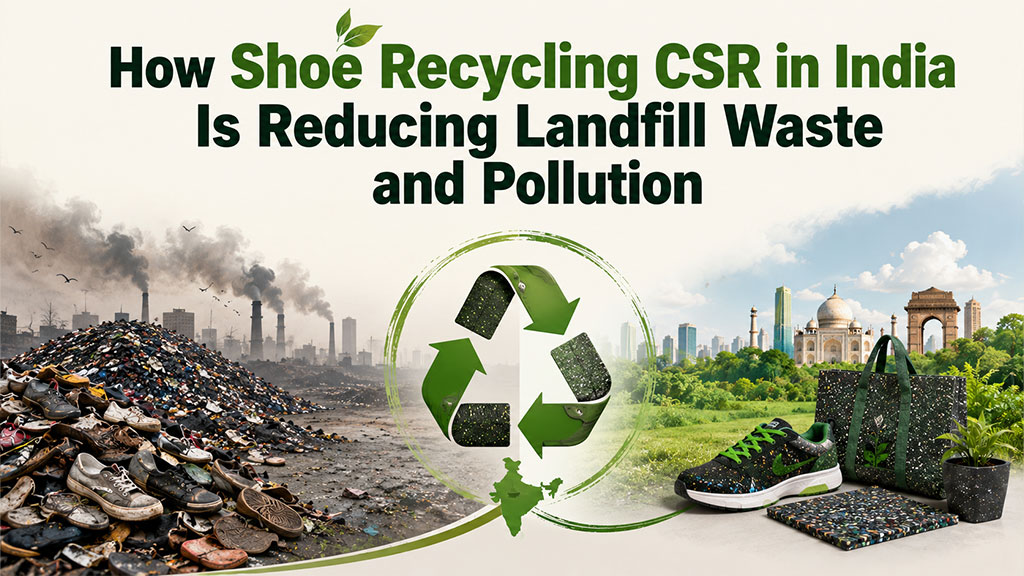
Every year, millions of pairs of shoes are discarded. Most end up in landfills, while others are burned or abandoned in open dumping grounds. What may seem like ordinary waste often carries long term environmental consequences. Footwear is made from a combination of rubber, foam, fabric, synthetic materials, and adhesives, making it difficult to break down naturally. As a result, discarded shoes can remain in the environment for years, contributing to pollution and placing additional pressure on already strained waste management systems.
This is where CSR driven recycling initiatives are making a difference. By collecting used footwear and recovering valuable materials, these programmes help divert waste from landfills and create products that continue to serve a purpose.
The Hidden Environmental Cost of Shoe Waste
Shoe waste is often overlooked in discussions about environmental pollution. Plastic waste tends to receive more attention, yet footwear presents its own set of challenges.
Every discarded pair occupies valuable landfill space. Unlike organic waste, shoes do not decompose quickly. Their bulky structure also makes them difficult to compact, increasing the volume of waste that accumulates over time.
Interestingly, many shoes are thrown away even when significant portions remain usable. In many cases, the sole wears out through regular use while the upper material remains intact. Yet the entire shoe is often discarded. This creates an opportunity to recover materials that still have functional value and give them a new purpose.
Improper disposal can create additional environmental concerns. Synthetic materials may release harmful substances as they deteriorate. In some cases, burning footwear contributes to air pollution, while long term exposure in landfills can lead to soil contamination. The challenge extends beyond disposal and highlights the need for more sustainable waste management practices.
Creating a Circular System Through Shoe Recycling
The foundation of shoe recycling lies in one simple principle: waste should not remain waste.
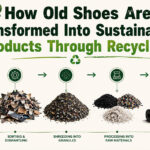
The process begins with the collection of used footwear through donation drives, community campaigns, and CSR partnerships. These initiatives help channel discarded shoes into a structured recovery system rather than allowing them to enter conventional waste streams.
Once collected, the footwear is carefully sorted. Materials are assessed based on condition, durability, and suitability for reuse. This stage is important because it determines how much of each product can be recovered and repurposed.
After sorting, the selected footwear undergoes cleaning and sanitisation. The materials are then dismantled into their individual components, including rubber soles, foam layers, fabric sections, and other reusable elements.
One of the most encouraging aspects of this process is the amount of material that can be recovered. When handled effectively, a substantial percentage of the original shoe can be reused, helping reduce waste while extending the lifecycle of valuable resources.
From Discarded Footwear to Useful Products
The real impact of recycling becomes visible when recovered materials are transformed into products that address everyday needs.
Rather than being discarded, usable materials are upcycled into practical items such as:
- Slippers for children
- School bags for educational support
- Mats for classrooms and community spaces
These products are designed to be durable, comfortable, and functional. More importantly, they create value far beyond waste reduction.
Upcycling differs from conventional recycling because it preserves the usefulness of existing materials rather than breaking them down completely. This approach reduces demand for new raw materials and lowers the environmental impact associated with manufacturing new products.
What was once considered waste becomes a resource that supports both people and the planet.
Reducing Landfill Waste at Scale
One of the most immediate benefits of shoe recycling is the reduction of landfill waste.
Every pair of shoes diverted from disposal represents less pressure on landfills. While a single pair may seem insignificant, the collective impact becomes substantial when thousands of donations are processed through organised recycling programmes.
Footwear waste is particularly challenging because of its size and composition. Large quantities accumulate quickly and remain in landfills for extended periods. By recovering and reusing materials, recycling initiatives help keep valuable resources in circulation rather than allowing them to become long term waste.
The result is a more efficient waste management cycle where materials remain useful for longer and landfill dependency is reduced.
Supporting Pollution Reduction
Reducing waste is only part of the environmental benefit.
When footwear is recycled instead of discarded or burned, pollution levels can also be reduced. Fewer shoes entering landfills means fewer materials exposed to long term environmental degradation. Similarly, diverting waste from open burning helps minimise the release of harmful emissions into the atmosphere.
Recycling also contributes to resource conservation. By recovering existing materials, the need for additional raw material extraction and manufacturing is reduced. This helps lower the overall environmental footprint associated with producing new products.
While no single solution can eliminate pollution entirely, structured recycling programmes provide a practical step towards cleaner and more sustainable communities.
Creating Social Impact Alongside Environmental Benefits
What makes this model particularly powerful is that environmental benefits are combined with meaningful social outcomes.
Many children across India still lack access to basic necessities such as comfortable footwear, school bags, and proper seating materials. These challenges can affect health, hygiene, comfort, and education.
Through upcycling initiatives, recovered materials are transformed into products that directly support these needs.
Key social benefits include:
- Improved access to footwear
- Better support for education through school bags
- Increased comfort through mats and seating solutions
- Greater dignity and wellbeing for underserved communities
The impact extends beyond products. Recycling and upcycling activities also create opportunities for skill development and livelihood generation, particularly for women and local communities involved in production processes.
The Importance of CSR Partnerships
CSR partnerships play a critical role in expanding the reach of recycling initiatives.
They help strengthen collection networks, increase awareness, and support the resources needed to process large volumes of footwear. Through collaboration, businesses can actively participate in sustainability efforts while contributing to measurable environmental and social outcomes.
By bringing together corporates, communities, and social impact organisations, these partnerships help create a larger movement focused on responsible consumption and waste reduction.
Looking Ahead
As sustainability becomes a greater priority across India, recycling initiatives are expected to play an increasingly important role in waste management strategies.
Growing awareness, stronger collection systems, and greater participation from businesses and individuals are helping build momentum. At the same time, innovations in material recovery and circular economy practices continue to create new possibilities for reducing waste and maximising resource use.
The opportunity is significant. With continued collaboration and commitment, more discarded footwear can be diverted from landfills and transformed into products that create lasting value.
Conclusion
Discarded footwear should not be viewed as the end of a product’s journey. With the right systems in place, it can become part of a circular model that benefits both the environment and society.
At Greensole Foundation, this philosophy guides our work every day. Through collection, recovery, and upcycling, materials that might otherwise contribute to landfill waste and pollution are transformed into products that support education, health, and community wellbeing. By bringing together sustainability and social impact, shoe recycling demonstrates how small actions can create meaningful change for people and the planet.