
Most people throw away a pair of shoes once the soles wear out. Yet much of the footwear often remains perfectly usable. The upper material may still be in excellent condition, but the entire pair is discarded. What many see as waste can still hold tremendous value.
That simple observation inspired a different way of thinking. Instead of allowing discarded footwear to end up in landfills, why not recover what is still usable and transform it into something meaningful? At the same time, millions of children across India continue to live without proper footwear, while many communities struggle to find sustainable livelihood opportunities. Upcycling creates a bridge between these challenges, proving that one solution can address several problems at once.
At Greensole Foundation, every donated pair of shoes begins a journey that extends far beyond recycling. It supports employment, develops practical skills, empowers communities, and eventually reaches children who need essential products the most. What starts as a simple donation becomes part of a much larger cycle of positive change.
More Than Recycling Materials
When people think about upcycling, environmental conservation is often the first thing that comes to mind. While reducing waste remains an important outcome, the impact goes much further.
Every donated shoe passes through several carefully managed stages before beginning its second life. Behind each of those stages are individuals whose skills and dedication keep the entire process moving.
Every step matters.
Rather than relying solely on newly manufactured materials, existing resources are brought back into use. This reduces landfill waste, conserves raw materials, and creates meaningful employment for people who may otherwise have limited access to stable work. Environmental sustainability and community development therefore grow together instead of existing as separate goals.
Turning Waste into Livelihoods
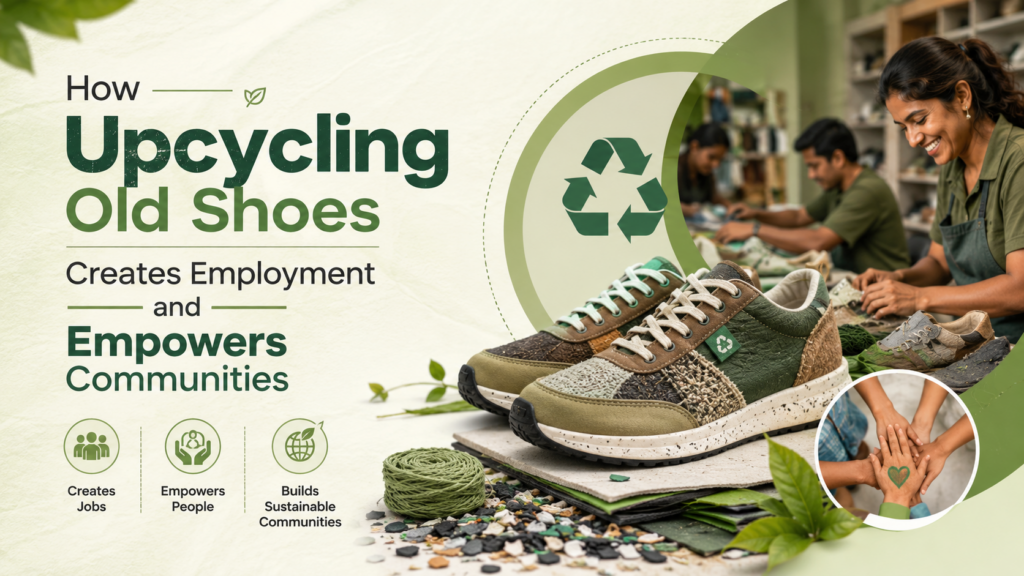
The transformation begins as soon as donated footwear reaches our facility. Each pair is inspected carefully to determine how it can be reused. Some shoes are refurbished for continued use, while others are dismantled so that valuable materials can be recovered and repurposed into new products.
This process depends on people.
Every stage requires trained individuals who understand the refurbishment process and maintain quality standards throughout production. Their expertise ensures that usable materials are recovered responsibly instead of becoming landfill waste.
The work involves:
- Sorting donated footwear
- Cleaning and sanitising materials
- Recovering reusable components
- Operating refurbishment equipment
- Stitching and assembling products
- Conducting quality inspections before distribution
Viewed individually, these tasks may appear straightforward. Together, however, they create a sustainable production system that supports livelihoods while giving discarded materials a second purpose. Every finished product reflects both environmental responsibility and human effort.
Skills That Build Independence
Employment has the greatest impact when it is accompanied by skill development. A regular income provides stability, but practical training creates opportunities that continue well into the future.
Through our Skill Centre, individuals receive hands-on training in refurbishment techniques, machinery operation, quality control, material handling, and product finishing. Learning takes place through practical experience, allowing participants to develop valuable technical skills while contributing to meaningful work.
The benefits extend well beyond the workplace. As individuals gain confidence in their abilities, they become better equipped to support themselves and their families. Over time, these skills help strengthen local communities by creating a workforce capable of contributing to sustainable production.
Our vision continues to focus on expanding these opportunities so that more communities can benefit from skill based employment linked to environmental responsibility.
Empowering Women Through Sustainable Work
Women play a vital role throughout the upcycling journey. Their contribution begins with material preparation and continues through production, assembly, finishing, and quality checks.
The work creates more than employment. It creates opportunity.
As women develop specialised skills, they become active participants in a circular economy that values both people and the environment. Their involvement helps transform discarded materials into slippers, bags, mats, and other essential products that improve everyday life for underprivileged children.
The impact reaches much further than the production floor. Greater financial independence strengthens families, increases confidence, and encourages long term community development. When women are empowered through meaningful work, entire communities benefit.
Innovation Creates New Opportunities
Innovation has always been central to expanding the impact of upcycling. While footwear remains the foundation of our work, other discarded materials also hold the potential to create value.
A recent example is our Flex to Bag initiative in collaboration with DBS Bank. Advertising flex banners are frequently replaced despite remaining durable enough for reuse. Rather than allowing this material to become waste, we transform it into school bags for children studying in rural schools.
One material finds a second life. Another child receives an essential resource for education.
Initiatives like these demonstrate how innovation can create additional employment opportunities while reducing waste streams that are often overlooked. Every new idea strengthens the circular economy and increases the positive impact created through upcycling.
Every Donation Creates a Ripple Effect
The journey of a donated shoe does not end when it leaves someone’s home. In many ways, that is only the beginning.
A single donation supports multiple stages of employment before reaching its final destination. It creates work for people involved in collection, sorting, refurbishment, stitching, finishing, and quality inspection. At the same time, it helps reduce landfill waste and extends the life of valuable materials.
The impact includes:
- Reduced landfill waste
- Lower carbon emissions through material reuse
- Employment and livelihood creation
- Skill development opportunities
- Women’s empowerment
- Better access to footwear for children
- Educational support through bags and mats
Very few everyday items can create such a wide range of environmental and social benefits from one simple act of donation.
Looking Ahead
Building a circular economy requires more than recovering materials. It requires collaboration, innovation, and people who believe that waste can become opportunity.
As more individuals, schools, corporates, and communities choose to donate, this positive cycle continues to grow. Every contribution helps create employment, strengthens local skills, supports sustainable production, and ensures that essential products reach children who need them most.
Real change does not happen overnight. It happens one donation, one refurbished product, and one empowered community at a time.
Conclusion
At Greensole Foundation, upcycling old shoes is about much more than extending the life of discarded footwear. It is about creating opportunities where they are needed most while protecting the environment for future generations.
Every donated pair supports a journey that creates employment, develops practical skills, empowers communities, and helps children walk towards a better future. By transforming waste into opportunity, we continue proving that sustainability is not only about protecting the planet. It is also about improving lives, strengthening communities, and ensuring that every step forward creates lasting impact.