
Every day, thousands of pairs of shoes are thrown away simply because they are no longer suitable for regular use. In many cases, only the sole has worn out. The upper part of the shoe, however, remains in good condition, yet the entire pair is discarded.
What seems like waste can still create value.
Across India, many children continue to walk barefoot or wear damaged footwear, exposing them to injuries, infections, and discomfort. Meanwhile, discarded shoes continue to pile up in landfills, creating an environmental challenge that grows every year. By donating an old pair instead of throwing it away, anyone can begin a journey that protects the environment, supports livelihoods, and improves lives.
Why Donating Old Shoes Matters
Footwear is one of the most difficult everyday products to dispose of responsibly. Most shoes are made using multiple materials such as rubber, foam, fabric, synthetic leather, and adhesives. These materials are difficult to separate, making conventional recycling a challenge.
As a result, millions of pairs end up in landfills every year.
Many of these shoes, however, still contain valuable materials that can be recovered and reused. Instead of becoming waste, they can be refurbished or upcycled into products that continue serving a purpose. This reduces environmental pressure while ensuring valuable resources remain in circulation for longer.
Sometimes, creating change starts with choosing to donate rather than discard.
The Journey of Your Donation
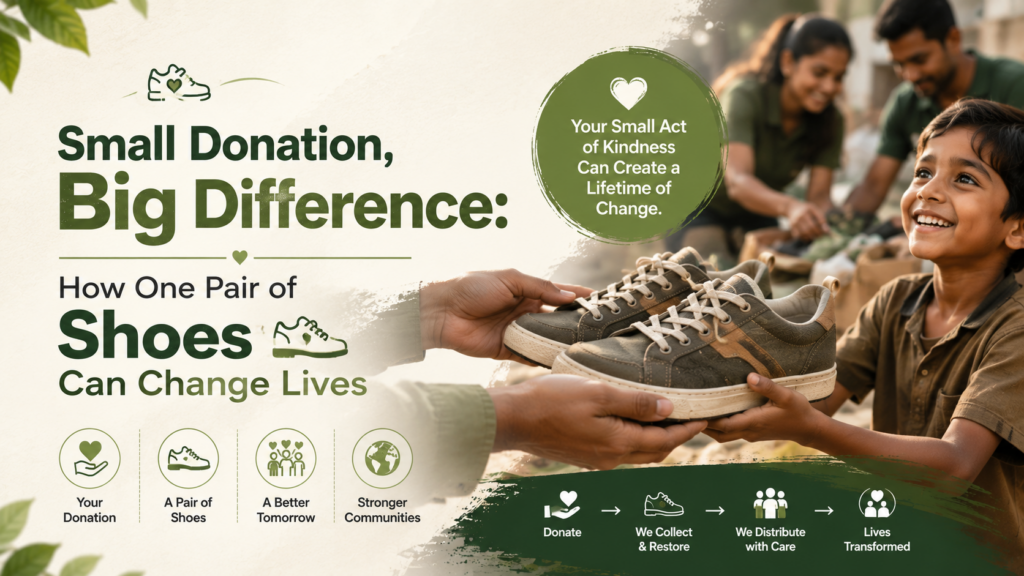
Every donated pair follows a carefully planned journey before reaching someone who needs it.
It begins with collection drives organised through individuals, schools, corporate partners, housing societies, and community groups across India. Once the footwear reaches our facility, every pair is inspected to determine how it can be reused.
Some shoes are carefully refurbished into comfortable slippers. Others are dismantled so that valuable materials can be recovered and given a new purpose. Industrial textile waste is also transformed into school bags and mats, ensuring that useful resources remain in circulation instead of becoming waste.
Every stage follows strict hygiene, safety, and quality standards. Nothing is rushed. Careful processing ensures each donation creates the greatest possible impact before moving to the next stage.
From Discarded Shoes to Everyday Essentials
The transformation process goes far beyond repairing footwear.
Recovered materials are thoughtfully converted into products that support children’s everyday needs. Depending on their condition, they become comfortable slippers, durable school bags, or sturdy mats used in classrooms and learning spaces.
Innovation plays an important role as well. Materials that might otherwise be discarded are given a practical second life instead of ending up in landfill.
The result is simple but powerful. Less waste is generated, more resources are recovered, and children receive products that improve their daily lives.
Reaching Children Who Need Them Most
The journey continues long after production is complete.
Distribution drives are organised in collaboration with local partners, education departments, CSR sponsors, and community organisations. The focus is on reaching government and low-income schools, orphanages, child care institutions, and rural and tribal communities where access to basic essentials is often limited.
Before every distribution drive, beneficiary details such as student numbers and footwear sizes are collected. This helps ensure children receive products that fit comfortably and meet their needs.
The programme also promotes awareness around hygiene, sustainability, and responsible consumption. Photographs, reports, and beneficiary feedback help document every initiative, ensuring transparency while measuring the impact created through each donation.
One Donation Creates Many Opportunities
The impact of every donated pair extends far beyond the child who eventually receives it.
Before reaching its destination, every product passes through many skilled hands. Donations are sorted, cleaned, refurbished, stitched, inspected, and carefully prepared for distribution.
Each stage creates meaningful work.
As more shoes are donated, more opportunities are created for people to learn practical skills such as refurbishment, machinery operation, material handling, and quality control. The production process also supports local livelihoods by training and employing workers, particularly women, helping them build financial independence while contributing to a circular economy.
One donated pair does far more than provide footwear. It creates jobs, reduces waste, conserves valuable resources, and helps essential products reach children who need them most.
Protecting the Environment, One Pair at a Time
Every donated shoe is also a step towards a cleaner environment.
Manufacturing new footwear requires considerable amounts of raw materials, energy, and water. Reusing existing materials helps reduce the demand for these resources while preventing discarded footwear from accumulating in landfill sites.
The environmental benefits continue to grow with every donation.
Some of the positive outcomes include:
- Reducing footwear waste sent to landfills
- Conserving valuable raw materials
- Lowering carbon emissions through material reuse
- Supporting circular economy practices
- Promoting responsible consumption and recycling
One pair may seem too small to matter. Yet when thousands of people choose to donate instead of discard, the combined impact becomes significant for both communities and the environment.
How You Can Make a Difference
Supporting this movement is easier than many people realise.
If you have old shoes that are no longer in use, consider donating them instead of throwing them away. Schools, housing societies, workplaces, and organisations can organise collection drives to encourage wider participation. Businesses can also strengthen their environmental and social commitments by supporting shoe donation initiatives through CSR partnerships.
Every contribution matters.
Whether it is one pair of shoes or an entire collection drive, every donation helps extend the life of valuable materials while supporting children, creating livelihoods, and protecting the environment.
One Pair. Many Lives.
A pair of shoes may have completed its journey with one person, but that does not have to be the end of its story.
Through collection, refurbishment, upcycling, and thoughtful distribution, it begins a completely new chapter. Along the way, it creates employment, develops skills, reduces landfill waste, conserves natural resources, and eventually reaches a child who can walk to school with greater comfort and confidence.
One simple donation creates many meaningful outcomes.
That is the true power of giving.
Conclusion
At Greensole Foundation, we believe meaningful change begins with simple actions.
Donating an old pair of shoes is more than an act of generosity. It reduces waste, conserves resources, creates sustainable livelihoods, and helps children access essential products that improve their daily lives.
One donated pair passes through skilled hands before reaching a child who needs it most. Along the way, it supports employment, encourages responsible recycling, and keeps valuable materials in use for longer.
That is the power of one small donation. Together, these individual contributions build stronger communities, create a cleaner environment, and prove that one pair of shoes really can change lives.